
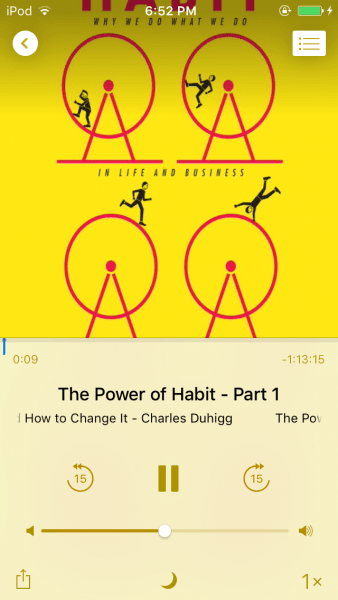
The Power of Habit Relisten
I started relistening to The Power of Habit by Charles Duhigg during my morning walk, and I wanted to document some early thoughts while they were fresh.
One thing that immediately stood out to me was how deeply Duhigg and his wife believed in the science of habits. According to the book, they even wrote out a habit plan for their marriage. At first that sounds extreme, but the more I think about it, the more it makes sense.
The author references psychologists and neuroscientists who argue that much of human behavior is driven more by habits than by intentional decision-making. That idea really stuck with me. We often think we’re consciously choosing our actions, but in reality, many of our routines are automated patterns our brains have developed over time.
From a neuroscience perspective, habits are efficient. Once behaviors become habitual, they require less mental energy and cognitive effort. In a way, the brain “outsources” repeated behaviors into habits so it can free up thinking power for other tasks. That concept alone makes me want to pay closer attention to the habits I’m reinforcing every day.
The Power of Habit — Part One (37 Minutes In)
At this point in the book, Duhigg discusses the famous patient H.M., a well-known neuroscience case study. H.M. underwent brain surgery intended to reduce the frequency of his seizures, but the procedure also resulted in severe short-term memory loss.
Cases like this really highlight how devastating neurological disorders and brain injuries can be. It also makes me wonder about the future of neuroscience and regenerative medicine:
- How close are we to recreating damaged parts of the brain in vivo?
- What progress has been made in reshaping or repairing neural circuits?
- Could damaged brain regions eventually relearn or recover lost functions?
These are the kinds of questions that make neuroscience so fascinating to me. The brain’s ability and limitations when it comes to memory, learning, and habit formation still feels like one of the most important frontiers in science.
Original draft written in October 2020.

