
Whiteness is seen as the norm in U.S. society. For example, in literature, the race of people of color is explicitly stated, while white characters are simply referred to as “people.” This raises an important question: if race is a factor in a book, should we state the race of every character, or should we avoid mentioning anyone’s race at all?
The term people of color also centers whiteness. It implies a binary, white people and then everyone else, even though white people are actually a global minority.
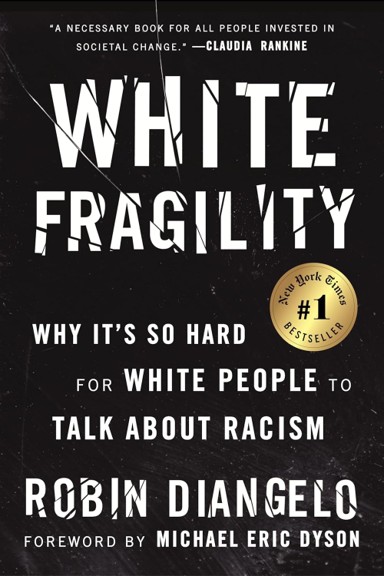
White Fragility by Robin DiAngelo explores the many ways Black Americans are oppressed in the U.S. and highlights major injustices against them. The author also examines why white people are often resistant to recognizing, acknowledging, and addressing these injustices. Many of the issues discussed are frequently covered in the media, though only to those who choose to pay attention.
Given how many people remain oblivious to the pervasive racism in America, I think this book serves as a good introduction for those beginning their journey toward understanding racial injustices, particularly anti-Black racism.
Important Takeaways
We need to examine how we define racism and racist. Society often portrays a racist as a card-carrying member of the KKK or someone who explicitly harbors hatred toward Black people or other non-white groups. Racism is equated with being a bad person, which is why many white people react so strongly to being called racist or having their actions labeled as racist. They truly believe they hold no overt ill will toward other ethnicities.
However, racism is deeply ingrained in American culture and society. A person can be good and still say or do racist things or contribute to racist systems. Acknowledging this reality is key to progress. One way forward may be to reshape how we call out racism. Instead of immediately labeling someone a racist, we could preface the conversation by acknowledging their intent and affirming that they may still be a good person, while making it clear that their words or actions were still racist.
This also makes me question whether we, as a global society, should move away from the concept of race altogether. The answer is likely yes, because race has no biological significance. If anything, we could emphasize ethnicity, as there are minor genetic and health-related differences among ethnic groups and people from specific geographical regions. That said, moving away from race as a concept would take generations, perhaps even centuries. While race has no biological basis, its social impacts are very real and long-lasting. Until we can eradicate or significantly reduce the societal harm caused by racial constructs, we must continue to acknowledge race and its impact on society.
Original draft written in July 2020.
 Gazing off into Space