
The Stone Sky
So one of the themes in this book is redemption. Take Essun, for example. She tried to teach her daughter how to survive in the world, but in doing so, she didn’t show her much love. Consequently, her daughter grew up without experiencing maternal love. Throughout the series, Essun’s primary focus has been on retrieving her daughter from her husband and ensuring her safety. Despite her past shortcomings in showing affection, Essun is now on a path to reclaiming her role as a mother and, hopefully, redeeming herself by demonstrating her love for her daughter.
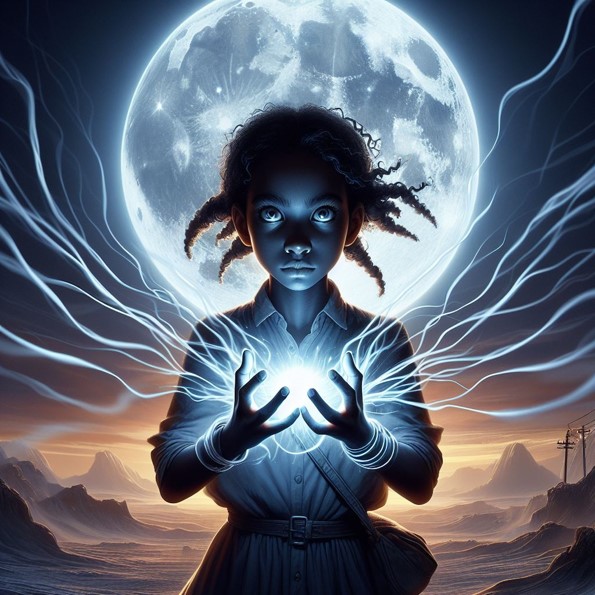
Nassun’s mission to bring the moon back to Earth in order to restore balance and prevent future fifth seasons is indeed a form of redemption story. Similarly, Earth’s desire to return to its proper place in the solar system and bring the moon back aligns with this theme of redemption, as it seeks to restore order and stability to the world.
Schaffa’s transformation from a morally ambiguous character to someone actively striving to be better and assuming a paternal role in guiding Nassun represents a clear redemption arc. His efforts to protect and mentor Nassun underscore his commitment to redemption.
As for Alabaster, while his role in initiating the fifth season initially casts him in a negative light, his motivations are revealed to be more complex. He seeks to rectify his past actions by attempting to bring the moon back to Earth before his death, thereby mitigating the catastrophic consequences of the fifth season. This can be interpreted as a form of redemption, as he strives to atone for his past mistakes and make amends for the harm he caused.
Moreover, the redemption of the orogenes as a class is symbolized by the actions of characters like Alabaster and Essun, who use their abilities for the greater good. By demonstrating their capacity to help others and contribute positively to society, they challenge the negative perceptions and stereotypes surrounding orogenes, thus redeeming themselves as a marginalized group.
It’s worth noting a particular scene in the book where the guardians, especially Schaffa and Nita, engage in a fierce battle. The description of their combat evokes imagery reminiscent of fight scenes from Dragonball Z, with lightning-fast movements and intense exchanges of blows. While this style of combat may be exhilarating for some, it can also be challenging for readers to visualize, particularly those accustomed to more grounded depictions of physical conflict.
Additionally, the perspective of Hoa from thousands of years ago offers insights into a different era before the cataclysmic events that transformed him into a stone eater. Trying to understand the nature of Hoa and his people proves to be a puzzle, as they are not exactly human orogenes but rather something artificially created for a specific purpose, possibly related to working with the obelisks or patrolling their use. Unraveling the mystery surrounding Hoa and his origins adds depth to the narrative and leaves readers intrigued to learn more.
Original draft written in August 2019.
 Gazing off into Space