
Why Is This Book So Good?
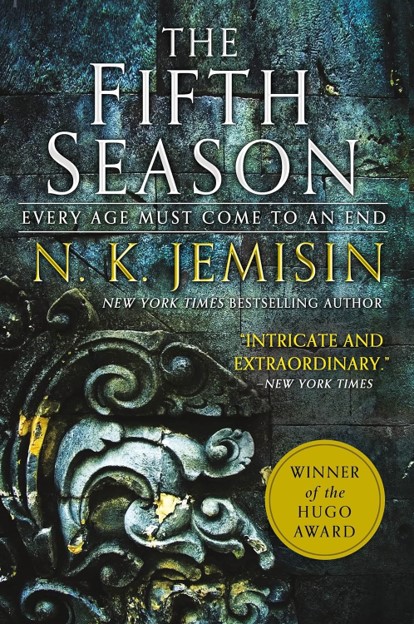
I’m currently around 75% through the The Fifth Season by N.K. Jemisin, and I’ve been pondering why it has received such high acclaim. The fact that it won the prestigious Hugo Award, the top honor in science fiction or fantasy, and that the subsequent two books in the trilogy also claimed the award, adds to my curiosity. As I delve into the narrative, I find myself captivated, although it differs from works like “Children of Blood and Bone” by Tomi Adeyemi in terms of pacing and action.
Unlike the fast-paced and action-packed nature of Children of Blood and Bone, each chapter in “The Fifth Season” doesn’t necessarily conclude with a suspenseful cliffhanger. Despite this, the book has managed to keep me intrigued. So I’m trying to think about what is it about this book that does have me captivated? And why did people think that this book was so interesting?
World Building
The recognition for N. K. Jemisin’s world-building skills becomes evident as I explore the story. The setting is a completely different world, somewhat resembling Earth but with distinct differences. The focal point is a vast continent, with some islands existing beyond it, largely unknown to many. In this unique world, there are humans who possess the ability to control and shape the earth, alongside others with the power to nullify these abilities. The introduction of stone eaters, beings with human-like qualities who can traverse the earth instantaneously, adds another layer of complexity. The diversity of characters extends beyond typical humans, introducing various abilities and entities.
While the narrative hasn’t extensively delved into other creatures in this world, there’s mention of a dog-like entity called a kusa, which instills a particular sense of fear in the story. Overall, the intricacies of this world and the diverse range of characters contribute to the book’s allure and might explain why it has received the top accolade in its genre.
The narrative introduces intriguing elements such as obelisks, colossal crystalline structures that hover in the sky, leaving most people clueless about their purpose. What makes the book captivating is the continuous exploration and unraveling of the mysteries within this unique world. Unlike stories where action feels forced, here, it seamlessly integrates into the overarching narrative. The constant discovery of new mysteries and the desire to understand more about the world contribute to a cohesive and engaging experience. Unlike some narratives where various world elements may seem disjointed, the world-building in this book appears well thought out and cohesive, following its own established rules.
Prejudice and Caste Systems
Another aspect that likely contributed to the book’s recognition, especially among the Hugo Award committee, is its exploration of themes like racism and classism. The world depicted mirrors real-life societies with a caste system. The narrative delves into these social issues, offering a different perspective that may be particularly impactful for readers who don’t often contemplate these issues. The book presents racism and classism in a way that may be revelatory and groundbreaking for those who don’t regularly confront these societal challenges. This approach adds an extra layer of depth and relevance to the narrative, making it resonate with a broader audience.
Spoilers!!! Major spoilers!!!
3 in 1
Earlier in the book, we discover that there are three characters: Damaya, Syenite, and Essun. It’s revealed around halfway through the book that Damaya is actually the younger version of Syenite, and the narrative explores different periods in her life. While this revelation should have been more apparent, especially given a significant world-changing event in Damaya’s story that isn’t referenced in the other two, I, like you, initially viewed them as separate individuals.
Around 75% into the book, on page 338 or so, I finally accepted that Syenite and Essun were likely the same person. The revelation was presented in a way that suggested surprise when we first learned that Syenite was Damaya. However, after finding out that Essun and Syenite were also the same person, I couldn’t help but think, “I should have seen that coming.”
I’m curious about how common it is for readers to experience this revelation while reading the book. Initially, I was intrigued by how the narrative would connect these seemingly distinct character arcs. As the story unfolds, it becomes evident that these characters are different facets of a single individual. While it simplifies the narrative, there were subtle hints dropped along the way, such as the mention of “no fulcrums” during Damaya’s training, indicating different time periods. The perspective shifts between characters also hinted at the temporal separation. For instance, Damaya is moving from Fulcrum to Fulcrum, undergoing training as Syenite, while Essun seems to be in a world without fulcrums. Initially, I thought she might be in her isolated bubble, but the truth is revealed later in the story.
The revelation about the Fulcrums, which seemed like a longstanding staple in this world, has sparked my curiosity about their origins and what ultimately happened to them. It’s intriguing to learn that these training facilities were not only ancient but also man-made. While the fact that they were created isn’t entirely surprising, it adds an extra layer to the narrative. The knowledge about the origins of Fulcrums appears to be preserved in the present day, particularly in the hands of the guardians who possess significant information about them.
More to Discover
This aspect aligns with the ongoing theme of unraveling mysteries and constantly learning more about the intricacies of the world. As the narrative progresses, it seems there’s much more to discover, and I’m eager to find out what else unfolds in the story. The preservation of knowledge within certain groups, like the guardians, adds to the complexity and depth of the world-building. So I’m interested to see what else happens.
Original draft written in June 2019.
 Gazing off into Space
2 thoughts on “Why is the Fifth Season so Good?”