
I recently read an article by Robin Kaiser-Schatzlein of the New York Times reviewing a Netflix miniseries by the Obamas about working-class life and how it is not depicted in media as much anymore. In the years prior to Ronald Reagan, there were shows such as Good Times and All in the Family that did so, but afterwards more content focused on higher social classes. Even in the 1990s there were shows like Married with Children and Roseanne, but nowadays we don’t see much of that anymore.
Television, Obama argues at one point, used to be full of representations of working and middle-class people and their jobs — say, in Norman Lear shows like “Good Times” or “All in the Family.” After the Reagan era, though, popular shows tended to follow upscale professionals, or to look more like “Friends” or “Seinfeld,” portraying people who lived comfortably despite being vaguely or fancifully employed. The nation’s jobs have shifted from industrial to service work, but even that seismic change — a work force now epitomized by nurses, waiters, retail clerks, delivery drivers — is rarely reflected in the stories we consume.
–Robin Kaiser-Schatzlein, NYTimes
I would not be surprised if there are still shows and movies that depict working-class life today, but they are not featured as prominently as they once were. Also, it is worth noting that we are in a different media landscape now, with much more viewing options and accessibility. So, what would be the best way to get these shows in front of viewers?
This article made me curious about how AI art generators would depict “working-class life.”
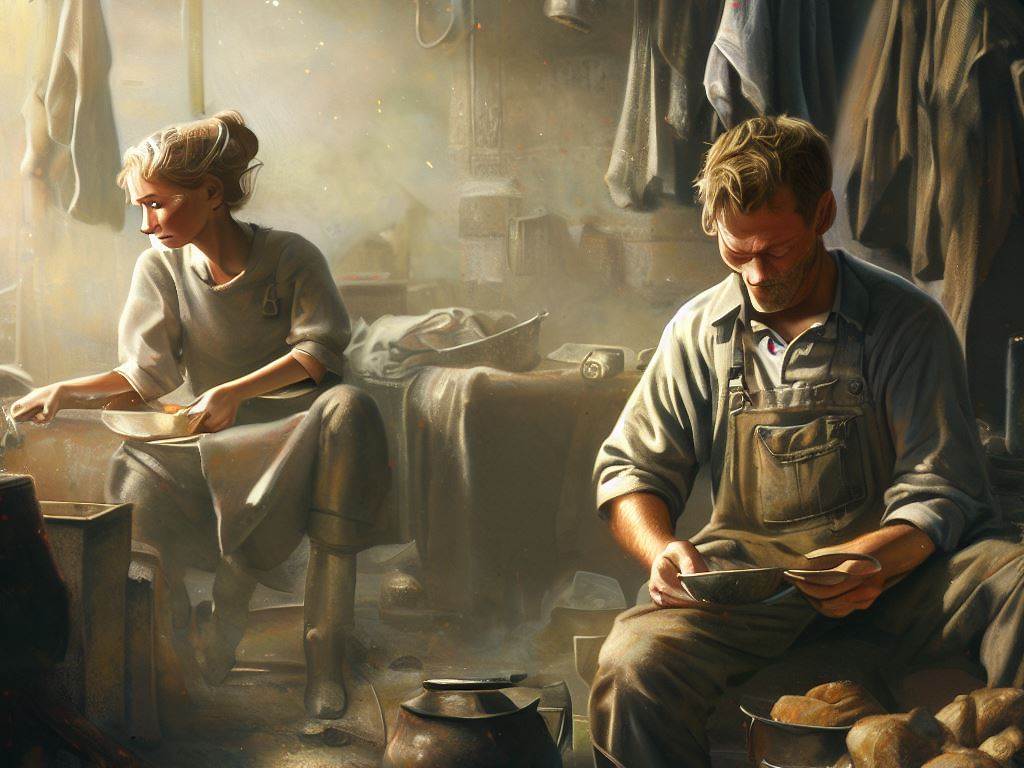
I put that exact phrase into Bing’s Image generator, which is powered by Dall-E and in my opinion, one of the best free ones. I received interesting results. The images basically depicted working-class life decades ago, like from the 1930s.
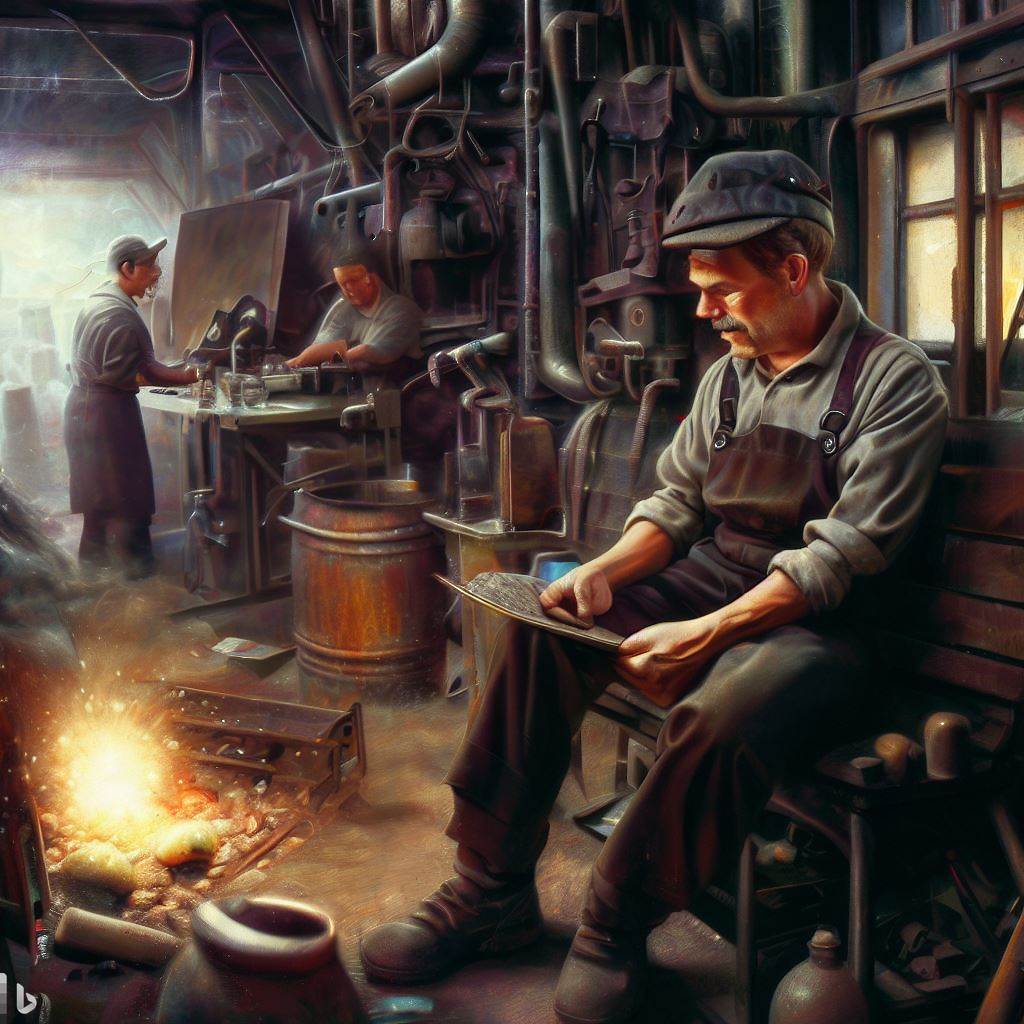
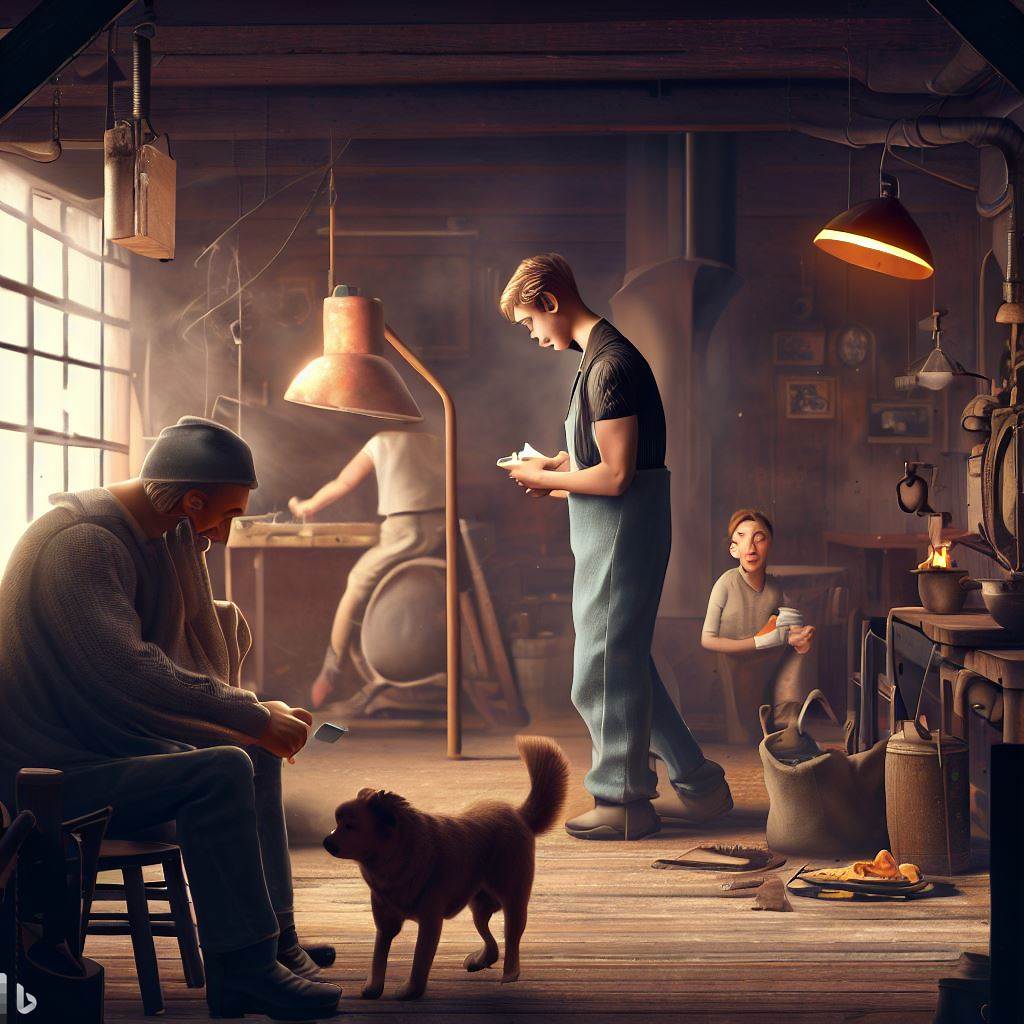
Even when I put in “modern working-class life” or “2020 working-class life,” I still pretty much received similar images, except for one that had people dressed in 1930s-style clothes in a futuristic city with that blue tint that a lot of “futuristic” artwork tends to have.
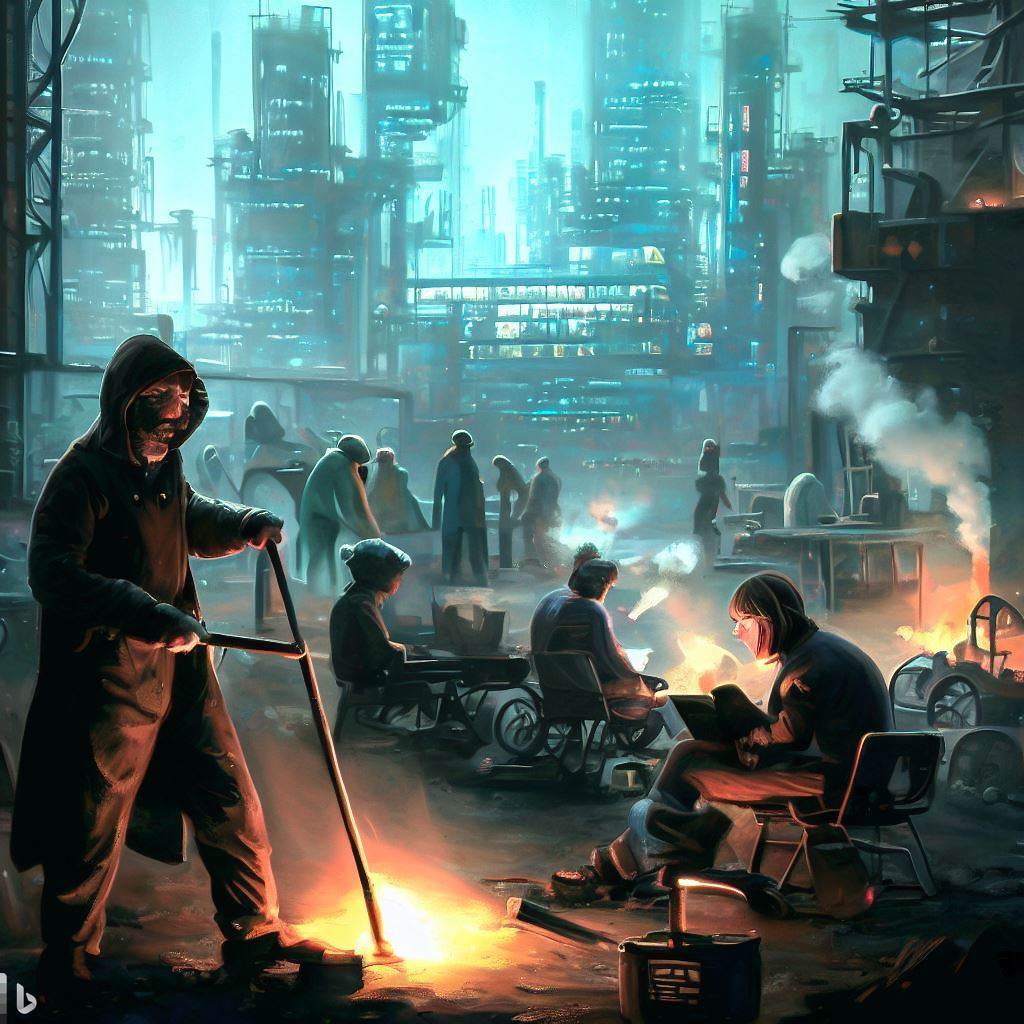
I think this further supports the point made in the New York Times article that we as a society are somewhat ignorant of what modern working-class life is like. There probably wasn’t much for the AI to base its images on, and it reflects that our view of the working class is stuck in time.
This brief experiment has made me curious about researching descriptions of modern working-class life and putting them through AI art generators to see what they come up with. It would be even better to see if others think they are reflective of modern times.
 Gazing off into Space
One thought on “Depicting Working Class Life”